


Fellow’s Research
This page is a curated collection of research projects conducted by INQUA Fellows. It showcases innovative studies and pioneering contributions to Quaternary, fostering knowledge exchange and inspiring collaborative research across disciplines.
Fellows 2025
Monika Ruwaimana
Universitas Atma Jaya Yogyakarta, Indonesia
Title: Pollen and spores record from late Pleistocene-Holocene inland tropical peat deposit in West Kalimantan, Indonesia
Fellowship duration: 3 months (November 2025 – January 2026)
Host Institution: University of Göttingen, Germany
Host Supervisor: Prof. Hermann Behling
Research Description: Pollen, Palynology, Tropical, Peatland, Record
Abstract
This report summarizes the scientific activities and outcomes of the INQUA Fellowship conducted at the University of Göttingen. The fellowship aimed to advance palynological analysis of tropical peat deposits from inland Borneo, focusing on reconstructing past vegetation dynamics and environmental change from the Late Pleistocene to the Holocene.
The studied peat sequence, dated up to approximately 50,000 calBP, provides a rare and valuable archive of long-term ecological change in equatorial Southeast Asia. The fellowship specifically focused on improving taxonomic resolution and documentation of pollen and spore assemblages, which are critical for high-quality paleoecological reconstruction.
Fellowship Implementation
Timeline Adjustment Due to Visa Delay: The fellowship was originally scheduled to begin on 1 November 2025. However, due to visa processing delays from the VFS Global, arrival in Göttingen was postponed until 11 November 2025. Despite this constraint, the research objectives were largely achieved through an intensive laboratory work schedule.
Laboratory Work and Methods
The laboratory work was conducted in the palynology facilities at the University of Göttingen under the supervision of Prof. Hermann Behling. The main activities included:
- Microscopic identification of pollen and spores from tropical peat samples
- High-resolution photomicrography for documentation
- Development of a reference image database for Bornean peatland taxa
Results
Pollen and Spore Identification
A total of 178 distinct pollen and spore morphotypes were identified during the fellowship.
This significantly improves the taxonomic resolution compared to earlier stages of the project. Approximately 3,000 high-quality microphotographs were captured using laboratory microscopy facilities. These images serve as a reference collection for future identification, support reproducibility and transparency in taxonomic classification.
Challenges
The primary challenge encountered was the delayed arrival due to visa processing. This reduced the available time for laboratory work by approximately 2.5 weeks. To mitigate this
Laboratory work was prioritized and scheduled intensively, and working around the Christmas/New Year break. Additional analytical work (image sorting and writing) continued after returning to Indonesia
Outputs and Future Work
A manuscript based on the fellowship work is currently in preparation. The improved pollen identification and image dataset form a central component of the paper. Planned target journals include high-impact journals in paleoecology and Quaternary science. Draft of the paper attached.
Fellows 2024
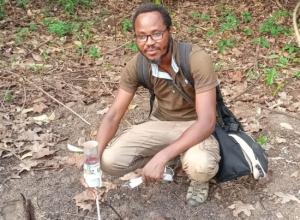
Alfred Houngnon
Laboratory of Applied Ecology, University of Abomey-Calavi, Benin Republic
Title: Reconstruction of human-environment interactions in the Dahomey gap: insights from charcoal fossils and pollen records from Ewe-Adakplame Forest, Benin (W. Africa). Mapping Ancient Africa (MAA)
Fellowship duration: 6 months (September 2024 – February 2025)
Host Supervisor: Professor William D. Gosling, Amsterdam University, The Netherlands
Research Description: Using fossils (charcoal, pollen), we aim understanding how much relics we see today in the Dahomey gap, are natural vs. shaped by humans.
Abstract
African ecosystems have experienced a long history of climate change and human occupation, with fire use. Development of siderurgy has also been an important turning point in human societal organization in several regions such as West Africa. Anthropogenic activities resulting from settlement/agriculture led to forests destruction because fuel for melting/forging comes from wood. The Dahomey Gap (a 200 km forest‐savanna corridor separating the West and Central African rainforest blocks) is still largely discussed to this end, since large amounts of its forested land
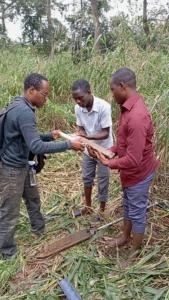 area have been replaced by savanna. The origins of this current landscape vegetation encompassing Ghana, Togo, Benin and Nigeria would have been attributed to the combined effects of climatic and Human. Several hypotheses including rainfall irregularity, alternation of drought and humidity, anthropogenic factors during the Holocene (last 11,700 years) have been put forward to explain this phenomenon. However, the human activities quantification over the last four millennia, with rise in the use of fire over vegetation remain unobserved within the Dahomey gap. Ewe-Adakplame Forest (EARF) is among unique and most diverse and persistent relics that would have survived from these past disturbances. It represents a “natural laboratories” and “past memory ” evidencing current floristic connection with both side forests of the Dahomey gap. We aim to provide a new perspective for comparative study of paleoecology using modern pollen, fossils (pollen and charcoal) to understand the degree to which humans settled and modified this landscape while maintaining some forest patches in savannah.
Objectives:
- to assess drivers of change in the Dahomey Gap since the past
- to establish a reference for the modern pollen of Ewe-Adakplame Forest
- to reconstruct vegetation, fire, and animal abundance histories for Ewe-Adakplame forest based on fossils
Daniela Piraquive Bermudez
University of Göttingen, Germany
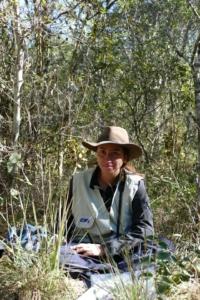
Title: Natural and human-induced environmental history reconstructed from fecal biomarkers in the Araucaria forest – Grasslands mosaics of Southern Brazil
Fellowship duration: 6 months
Host Institution: Max Planck Institute for Biogeochemistry, Germany
Host Supervisor: Prof. Dr. Gerd Gleixner
Research Description: Interested in evaluating the impact of climate and land use on past, present and future biodiversity in the tropics and sub-tropics of South America. To explore these topics, Daniela employs a wide range of proxies in the fossil record, including pollen, non-pollen palynomorphs (NPPs), charcoal, fecal and leaf-wax biomarkers, isotopes, and X-ray fluorescence (XRF) data.
Abstract
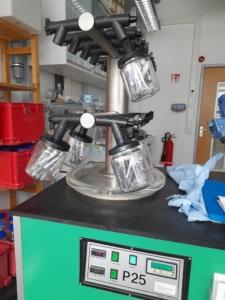 The forest-grassland vegetation mosaics are very contrasting ecosystems, differing from their structure to functionality. Their controlling factors and their heterogeneity have been very intriguing aspects that fascinate researchers worldwide. To date, few natural remains of these ecosystems, such as the Araucaria and Campos region in southern Brazil, exist. Different paleoecological studies account for the vegetation, climate and induced human history of the region, documenting changes like shifts between forests and grasslands from the last glacial period until the Late Holocene and the possible human impact related to fire activities since the Early Holocene. However, uncertainty remains about whether humans were locally present in the area and if they did or did not influence the vegetation system changes, using either fire as a disturbance or livestock in the surrounding areas. To investigate the Holocene history of local human occupation and livestock in the Araucaria forest – Grasslands mosaics in southern Brazil inferred from fecal biomarkers, samples from the already available high-resolution record of Lagoa Dourada covering the last 10300 cal yr BP, will be used for this research.
Objectives
This research proposal aims to investigate the Holocene history of local human occupation and livestock inferred from fecal biomarkers in a sedimentary record (Lagoa Dourada) located within the Araucaria forest – Grasslands mosaics in the highlands of Paraná, southern Brazil.
Rieneke Weij
University of Cape Town, South Africa
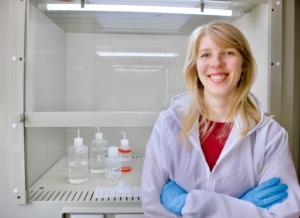
Title: Quantifying Quaternary temperature and rainfall patterns in South Africa to unravel their influence on early human evolution
Fellowship duration: 4 months
Host Supervisor: Hubert Vonhof, Germany
Research Description: Fluid inclusion stable isotope and TEX86 analyses of speleothems to understand climate variability over the last 3 Ma in South Africa and its impact on human evolution
Abstract
Understanding the terrestrial response to past climate and environmental change and its impact on human evolution is one the greatest questions of all time. South Africa hosts some of the oldest hominin fossil remains, centred in the UNESCO Cradle of Humankind World Heritage site, known locally as the Cradle. Climatic and environmental change played a pivotal role in the adaptation and diversification of our early prehuman relatives, however, little climatic proxy research has been carried out here. As such, the past climatic conditions in the Cradle remain poorly understood, especially during
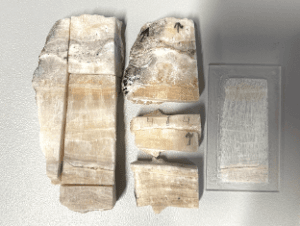 the Late Pliocene-Early Pleistocene when some of our early pre-human relatives evolved. To address this issue, this research provides the first quantitative multi-proxy record of past climate change in the Cradle during the last 3 Ma using speleothem deposits. Speleothems, secondary carbonate deposits, are useful indicators of significantly wetter conditions and record past environmental and climatic changes through multiple proxies. They form the “golden standard” among palaeoclimatic archives because they can be precisely and accurately dated using U-Th and U-Pb techniques. Recent developments now allow for rapid and robust isotope analyses of fossil drip water (in fluid inclusions) and biological proxies (TEX86) within speleothems to quantify past rainfall and temperature variability. These new data provide interesting food for thought as to how past climate variability influenced human evolution in South Africa and places the 3.0 to 1.0 Ma Cradle record in an environmental context wetter than what this region experiences today.
Objectives
Using 30 speleothems from the Cradle, the objectives are:
- to quantify variability in rainfall amount and source using fluid inclusion and speleothem stable isotopes
- to quantify palaeotemperature variations through TEX86 analyses
- to reconstruct climate change over the last 3 Ma in South Africa and its influence on human evolution
Mitthu Dhali
Indian Institute of Technology Kanpur, India
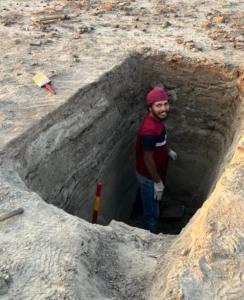
Title: Paleoseismological investigations and tectono-geomorphological evolution of the Himalayan Foothill zone between MBT and HFT in Kumaun region of Central Himalaya
Fellowship duration: 6 Months (from June-November 2024)
Host Supervisor: Dr. Pierfrancesco Burrato, Italy
Research Description: Understanding of the past earthquakes and estimation of long-term deformation of the Himalayan frontal belt in the Kumaun central Himalaya.
Abstract
The Central Himalaya, encompassing western Nepal and the Kumaun region, represents a high-strain-rate zone characterized by complex deformation and significant seismic hazard. Despite hosting major thrust systems such as the Main Boundary Thrust (MBT) and Himalayan Frontal Thrust (HFT), the region has experienced a seismic gap of over 500 years since the last great earthquake in 1505 AD (Mw 8.2). The study aims to investigate the long-term deformation and seismic history of the Himalayan frontal belt to understand tectonic processes, landform evolution, and seismic hazard potential. Field mapping and geomorphic analysis of features like fault scarps, deformed alluvial terraces, and river diversion along the MBT and HFT are employed to identify active faults, estimate slip rates, and analyse folding patterns. Fluvial terraces along major rivers such as Gaula, Sarda, and Nandhaur provide constraints on incision and uplift rates, while paleoseismic trenching on the uplifted alluvial fan surface or river terraces along HFT will help to reconstruct past earthquake events, coseismic slip, and recurrence intervals. The study will also establish an earthquake catalog using historical data and paleoseismic findings. By integrating satellite data, morphometric analysis, and geophysical tools, this research will elucidate the deformation patterns and tectonic evolution of the region. The findings will be helpful in seismic hazard assessment (SHA) in densely populated Himalayan foothill areas.
Objectives:
- Identification of active faults, their geometry, and their role in the landform evolution
- Estimation of the long-term incision/uplift rate of the fluvial terraces of the region and calculation of the slip rate along MBT and HFT
- Paleoseismic investigation to identify paleoearthquakes of the region
Valentina Andrea Álvarez-Barra
Centro de Investigación en Ecosistemas de la Patagonia (CIEP)
Title: Application of novel methods of estimating relative pollen productivity: a key for reconstruction of Quaternary land cover from Chilean Patagonia (QLANDPAT)
Fellowship duration: 3 months
Host Supervisor: Dr. Jane Bunting, United Kingdom
Research Description: To assess the applicability of the quantitative approach within Aysén landscapes, by calculating the relative pollen productivity and the relevant source area of pollen.
Abstract
Most palynological studies emphasize the role of climate in driving vegetation patterns. In Patagonia, many studies have focused on glacial and postglacial vegetation changes as a response to shifts in the position and strength of the southern westerlies. Nevertheless, these interpretations have assumed that pollen proportions are a direct representation of vegetation abundance, without considering variables such as differences in pollen productivity, dispersal and preservation of pollen grains, leading to a bias in representation or even the absence of certain plant in the pollen record. Reconstruction of past land cover from the pollen record can be improved and quantified by including consideration of the relationship between pollen production by plants scattered across a past landscape and the pollen dispersal and deposition processes that create the pollen recording a sedimentary system like a lake or peat. This research aims to parameterise, validate and apply the quantitative method for reconstruction of past vegetation cover in the Chilean Patagonia, by calculating RPPs and the relative source area of pollen (RSAP) of the main plant taxa often found in palaeoecological records from Patagonia.
Objectives:
- to assess the applicability of the quantitative approach within Aysén landscapes
- to calculate the relevant source area of pollen (RSAP)
- to calculate the relative pollen productivity (RPP)
Muhammad Usman
University of Milano-Bicocca, Italy
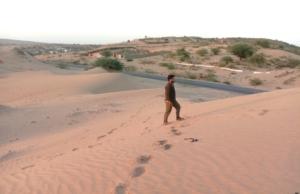 Title: Controls on Sediment Supply to the Holocene Thar Desert
Fellowship duration: 6 months
Host Institution: University College London, UK
Host Supervisor: Prof. Peter Clift,
Research Description: Comparison of the Thar Desert sediments with river and delta deposits from the modern and Holocene allow to constrain the origin of the desert sands, and to better understand the processes that have allowed the desert to form in both the contrasting north and south.
Abstract
Deserts form potential sediment buffering regions within large drainage systems that can influence the composition and character of sediment reaching the ocean. In this project, I assess the potential role of the Thar Desert in controlling sediment reaching the Arabian Sea from the Indus River. The work is important for interpretation of high resolution, marine sediment sequences, as well as being important to understanding of what processes control the growth and migration of the desert within this monsoonal area. Does sediment supply from the river or the intensity of the summer monsoon dominate in controlling the growth of the desert? I employ a suite of bulk sediment, geochemical, and isotopic methods, combined with single grain, rutile trace element geochemistry, to define the character of the sediment in different parts of the Thar Desert. By comparing with existing data from the river, delta and associated tributaries I will define from where and when sediment was supplied to the desert from different parts of the Indus drainage system. The work will be of significance to geologists seeking to understand the erosion history of the Himalaya, as well as more generally to those investigating the importance of deserts in sediment source-to-sink transport.
Objectives:
- to understand the origin of sediment supply to the Thar desert;
- to establish its links with the drainage of the Indus River, and its tributaries that lie immediately to the west;
- to address the origin of sediments in the modern desert through a series of geochemical proxies that attempt to quantify the primary sources to different parts of the desert.
Delve more
Projects & Fellowships
INQUA promotes international collaboration in Quaternary Science and aims to improve communication and cooperation through networking. To encourage and facilitate this collaboration, INQUA offers financial support for projects, including the development of International Research Networks…