
INQUA 1702F : Holocene Global Landuse (HoLa)
Holocene Global Landuse (HoLa) was an interdisciplinary working group dedicated to reconstructing land use across the Holocene through a global, comparative perspective.
Abstract
Human land use activities are known to be drivers of vegetation change and can also produce potentially significant levels of greenhouse gases such as methane. However, the complex and variable relationships between land use (anthropic) and land cover (mostly climatic) are still insufficiently understood. Differing assumptions about these relationships have led to significant differences between models of anthropogenic land cover change (ALCC), a critical shortcoming with immediate scientific and policy implications for work on global climate.
HoLa was an International Focus Groups (IFG) of the Humans and the Biosphere Commission (HabCom) of INQUA (from which was funded), which focused on building capacity, creating new and internationally shared databases, and producing initial models of the relationships between human land use and climate.
The Holocene Global Landuse IFG wass the first global initiative to assess anthropic activity on the environment via the archaeological record (e.g. geoarchaeology, bioarchaeology, material culture, etc.). A specific character of this IFG initiative was the spatial and temporal downscaling approach to firmly frame the archaeological and palaeoclimate data. As such, HoLa was closely associated with the PAGES working group LandCover6k.
Objectives:
- To build capacity, both through the continued development of an interdisciplinary research community linking scholars of human history with palaeoecologists and modellers, and through the establishment of new resources for data sharing and collaboration.
- To develop data procedures and a global database, formed through linked continental-scale databases and a bottom-up approach, to enable the collection of data from a wide network of collaborators.
- To support novel collaborations in which 1) ALCC modellers and others work to improve model parameters and assumptions, and 2) which integrate historical land use data with land cover data, carbon cycles, methane levels, and other topics of interest.
Project leaders:
- Marco Madella, Pompeu Fabra and IMF-CSIC, Spain
- Kathleen Morrison, University of Pennsylvania, Museum of Archaeology and Anthropology, USA
- Nicki Whitehouse, University of Glasgow, University of Plymouth, UK
- Marie-José, Linnaeus University, Sweden
Delve deeper
Latest developments
View moreLatest developments QEH Special issue: Call for papers
Anthropisation of riverscapes
 Royal Society meeting issue
Philosophical Transactions B under the ‘Subscribe to Open’ 2026 initiative
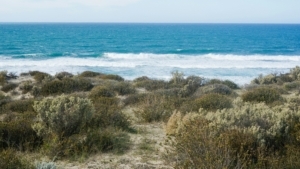 Quaternary Science in Latin America: Building the Future from the Global South!
The First Latin American INQUA Meeting – 2026 is coming to Puerto Madryn, Patagonia, Argentina, on 11–12 November 2026! 🇦🇷
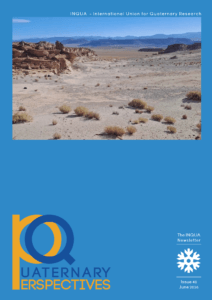 QP Issue 40 Now published
The new issue of Quaternary Perspectives was published!
 Geo-Research Scholars Meet 2026 India
The Geo-Research Scholars Meet, will be hosted by the Wadia Institute of Himalayan Geology, India