INQUA 2601 sy: From Cores to Code: using Quaternary geology to forecast coastal change (CoreToCode)
Abstract
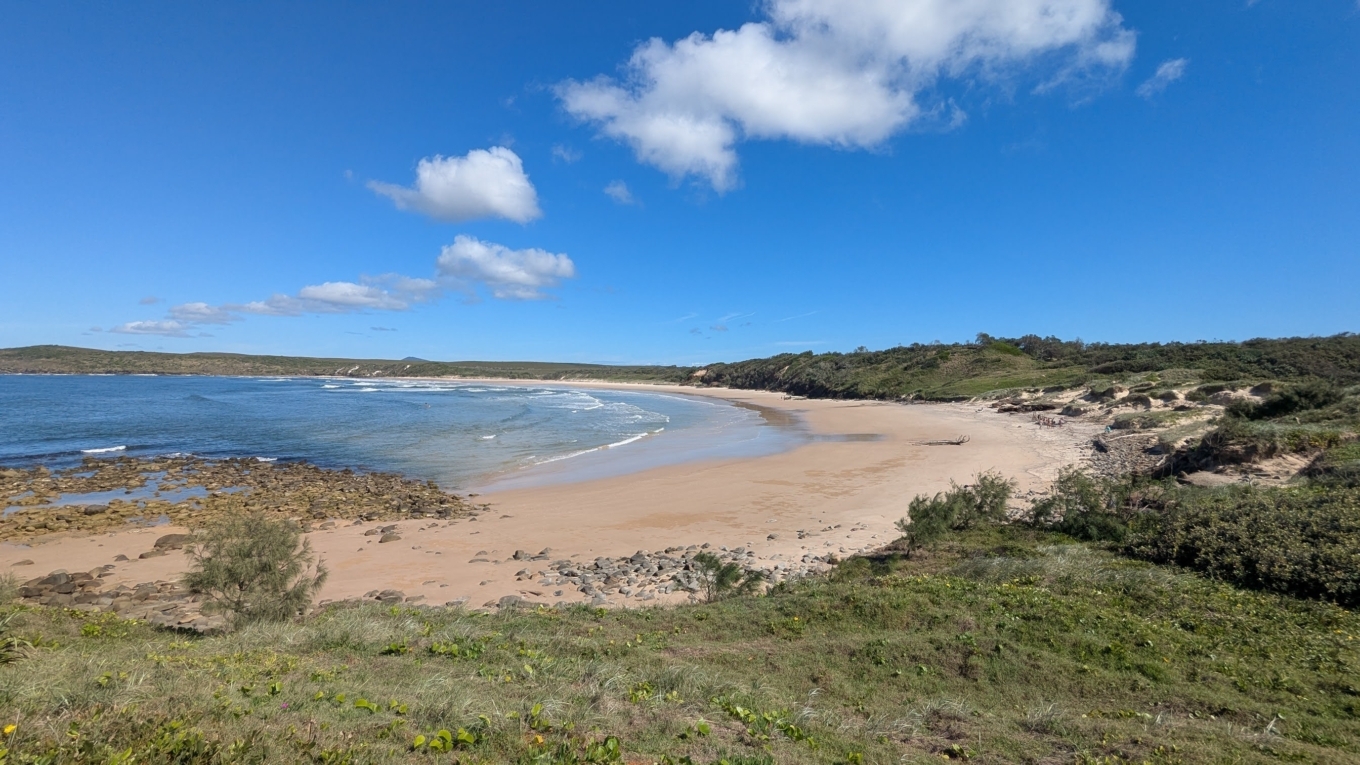
Understanding the drivers, processes and scale of coastal change over the late Quaternary is central to our ability to manage the coastal zone. One of the key scientific aims is to improve our ability to forecast how coasts will respond to future conditions, enabling better decision-making. Achieving this requires the integration of geological expertise, robust data collection and analysis, and numerical modelling to produce quantitative forecasts of the drivers and physical-system responses to coastal change, both spatially and temporally.
A meeting and field trip in Queensland and northern New South Wales (Australia) on 17-23 October 2026 will bring together field/process geologists, coastal engineers, and numerical modellers from around the world who share an interest in coastal change, to address questions such as:
1. How can observational and modelling approaches in Quaternary coastal research be co-designed so that field data improve coastal dynamics predictive modelling reliability, and models inform Quaternary geology data collection?
2. What feedback between coastal dynamics modelling uncertainties and field sampling strategies can most effectively improve model accuracy and predictive skill?
3. What data resolution from Quaternary analogue systems do coastal modellers need to provide accurate simulations of coastal change?
4. Over what spatial and temporal scales can landscape and sedimentary records provide appropriate validation of model outputs?
5. How can numerical models of coastal dynamics and sedimentation improve our understanding of the genesis, dynamics, and preservation of stratigraphy/landforms?
INQUA funding allows us to offer reduced registration rates to all students, ECRs, and DCRs.
Project leaders:
Dr. Annie Lau – School of the Environment, University of Queensland, Brisbane, Australia
Dr. Guilherme Vieira da Silva – Coastal and Marine Research Centre, Griffith University, Australia


Latest developments
View moreLatest developments Podcast INQUA India 2027
Quaternary is the age when modern recognisable humans started inhabiting this planet. All over the world scientists are engaged in studying various aspects of human evolution. Once every 4 years scientists from all across the…
 QI Special Issue: Mapping Ancient Africa
The QI Special Issue Mapping ancient Africa: Climate, vegetation & humans is the result of an INQUA-funded project
 Expression of Interest for INQUA’s Future Actions
Are you from Latin America or Polar Sciences? Then, join INQUA’s future activities!
 8th Regional Meeting on Quaternary Geology, Slovenia
The event will take place from 4–6 November 2026 in Čatež ob Savi, East Slovenia.
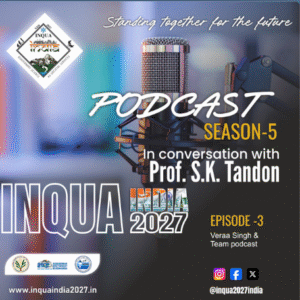 Podcast INQUA India 2027
Quaternary is the age when modern recognisable humans started inhabiting this planet. All over the world scientists are engaged in studying various aspects of human evolution. Once every 4 years scientists from all across the…
 International Summer School 2026 – Climate change in coastal areas: hot topics, future projections, impacts
International Summer School 2026 – Climate change in coastal areas: hot topics, future projections, impacts 3-6 June 2026, Venice (Italy)