
Project 1801: Carbon in Peat on Earth through Time (C-PEAT)
Peatlands play a crucial role in the global carbon cycle, acting as a substantial carbon storage site and a significant source of methane emissions into the atmosphere. Worldwide, changes in climate, peatland fires, and land use profoundly impact the carbon balance of peatlands, often turning them from carbon sinks into carbon sources.
Abstract
Efforts to preserve and rehabilitate peatlands require a more comprehensive understanding of how peatlands respond to current and future changes. Incomplete knowledge hinders our ability to share information about peat carbon cycling with diverse stakeholders and incorporate peatlands into Earth System Models. This integration is essential for predicting the climate system’s global carbon cycle and feedback loop.
The primary goal of the C-PEAT initiative is to gain insights into peatland dynamics over various periods, ranging from millennia in the past to the present day, and to make predictions about their response to future changes, both on a global and local scale. To achieve this, we utilize data from peat cores to reconstruct past ecological and climatic changes and establish connections between historical conditions and alterations in peatland dynamics. These historical datasets are combined with contemporary measurements, including gas emissions data, and incorporated into models. Furthermore, our team actively participates in initiatives related to nature-based climate solutions, encompassing activities such as peatland restoration and conservation.
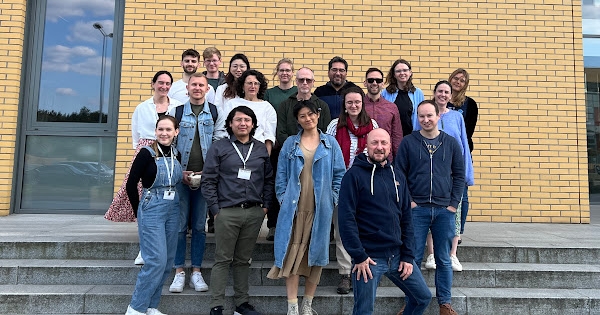
In 2023, the C-PEAT workshop simultaneously occurred in three different international locations: Poland, the USA, and Indonesia. While each location had its schedule of speakers and activities, all three hubs shared a common research agenda. Daily two-hour “global discussions” also brought together online participants from all three hubs to exchange crucial insights and ideas from the previous day’s sessions. 48 participants attended in person, 16 joined remotely to give presentations, and 30 remote participants actively engaged in the workshop.
The first day of the workshop primarily focused on setting a research agenda for tropical peatlands. Days 2 and 3 were dedicated to addressing issues related to quantifying recent changes in peatland carbon dynamics and exploring potential solutions. Day 4 involved sharing the latest progress on ongoing data community projects and reflecting on the achievements during the second phase of our Working Group. During this time, we also reaffirmed our research priorities for the upcoming phase of C-PEAT. Additionally, we engaged in discussions about maintaining our core identity as scientists specializing in paleo-peat, acknowledging that our community of practice has significantly expanded in recent years to include modelers, scientists specializing in modern measurements, experts in restoration and conservation, as well as stakeholders specialized in carbon accounting.
On Day 5, hubs organized field trips for local participants to provide them with hands-on experiences. Lastly, the workshop significantly expanded our community of scientists, particularly among early-career researchers and those from developing countries.
Project Leaders:
- Gallego-Sala Angela, Exeter, UK
- Mariusz Lamentowicz, Poznań, Poland
- Katarzyna Marcisz, Poznań, Poland
- Danuta Żurkiewicz, Uniwersytetu Poznańskiego, Poland

Latest developments
View moreLatest developments QEH Special issue: Call for papers
Anthropisation of riverscapes
 Royal Society meeting issue
Philosophical Transactions B under the ‘Subscribe to Open’ 2026 initiative
 Quaternary Science in Latin America: Building the Future from the Global South!
The First Latin American INQUA Meeting – 2026 is coming to Puerto Madryn, Patagonia, Argentina, on 11–12 November 2026! 🇦🇷
 QP Issue 40 Now published
The new issue of Quaternary Perspectives was published!
 Geo-Research Scholars Meet 2026 India
The Geo-Research Scholars Meet, will be hosted by the Wadia Institute of Himalayan Geology, India