Project 2317 sa: Challenges in paraglacial fluvial terrace geochronology (CPFTG)
An INQUA workshop for early career researchers (ECRs) focused on challenges in Quaternary fluvial geomorphology and geochronology was held in Aviemore, Scotland from July 23 – 26, 2023.
Abstract
The workshop brought together three senior scientists and twelve early career researchers from Chile, Brazil, France, Canada, the United States and the United Kingdom all interested in this research area. ECR participants presented short talks on their research under the following themes: (1) the paraglacial geomorphology of Scotland, (2) remote sensing, landform mapping and topographic analysis, (3) novel applications of Quaternary dating methods, and (4) alluvial systems and climate.
Methodological workshops on optically stimulated luminescence dating and cosmogenic radionuclide dating as applied to Quaternary fluvial terrace sequences were delivered by L. Owen (North Carolina State University, USA) and I. Larsen (University of Massachusetts Amherst, USA). C. Ballantyne (University of Saint Andrews, UK) gave a keynote talk on the development and future directions of paraglacial geomorphology research. M. Fame (Amherst College, USA), E. Orr, and R. Harries (Durham University, UK) led a field excursion to the Glen Feshie fluvial terrace sequences in the Cairngorm Mountains and a series of discussions on challenges impacting ECRs. Following the workshop, a few participants remained with the workshop organisers and provided field support during their field season in Glen Feshie.
Project Leaders:
- Michelle Fame, Dartmouth College, USA
- Elizabeth Orr, Durhma University, UK,
- Rebekah Harries, Durham Unversity, UK

Latest developments
View moreLatest developments Expression of Interest for INQUA’s Future Actions
Are you from Latin America or Polar Sciences? Then, join INQUA’s future activities!
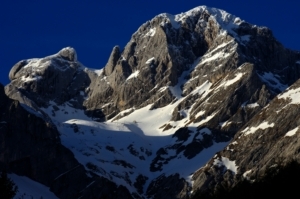 8th Regional Meeting on Quaternary Geology, Slovenia
The event will take place from 4–6 November 2026 in Čatež ob Savi, East Slovenia.
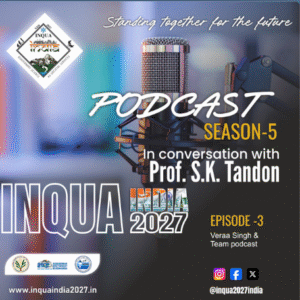 Podcast INQUA India 2027
Quaternary is the age when modern recognisable humans started inhabiting this planet. All over the world scientists are engaged in studying various aspects of human evolution. Once every 4 years scientists from all across the…
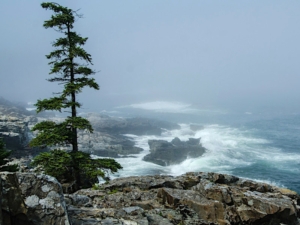 International Summer School 2026 – Climate change in coastal areas: hot topics, future projections, impacts
International Summer School 2026 – Climate change in coastal areas: hot topics, future projections, impacts 3-6 June 2026, Venice (Italy)
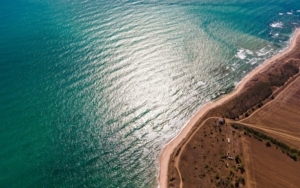 Loess Fest 2026
Echoes of the past: Loess, climate and human interactions during the Pleistocene will take place between 7-11 September in Krapets, Bulgaria
 Podcast INQUA India 2027
Quaternary is the age when modern recognisable humans started inhabiting this planet. All over the world scientists are engaged in studying various aspects of human evolution. Once every 4 years scientists from all across the…