INQUA 2612 s-y: Workshop on the impact of climate and environmental change on the peopling of southern South America (CLIMPEOP-SSA)
Abstract
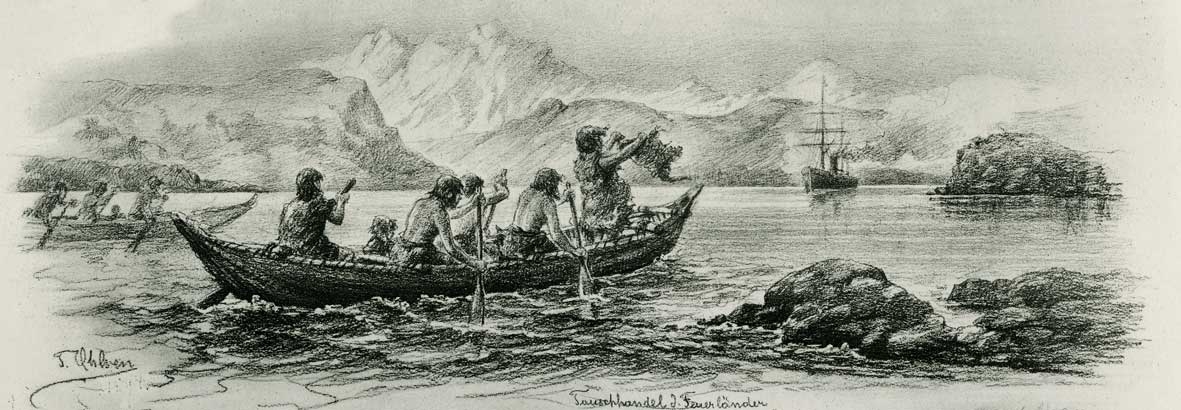
As the effects of climate change intensify, understanding how past societies responded to natural climate and environmental variability becomes increasingly urgent. Doing so requires a tight cooperation between specialists in geosciences (paleoclimatology, paleoenvironments) and social sciences (archeology, socioecology). Yet, these communities largely work independently, which limits our ability to investigate complex climate-human interactions. One key question that remains unresolved due to this lack of genuine interdisciplinarity is how human societies responded to climate-driven environmental variability, particularly in high-latitude environments. Understanding these responses is critical not only for revealing how past societies achieved resilience in such changing and hostile environments, but also for informing how modern societies might adapt to ongoing and future climate change.
With support from the INQUA HABCOM commission, we are organizing a 2.5-day interdisciplinary workshop bringing together specialists in paleoclimatology, paleoenvironments, and archeology of southern South America, to address a common scientific question: how did climate variability and the related changes in glacier extent, salinity, productivity, and vegetation influence human occupation and mobility in southern Patagonia?
The workshop will take place at Paris-Saclay University, France in September 2026 and it will feature invited experts, early-career scientists, and students, from at least seven EU and South American countries. More than fifteen researchers have already confirmed their participation, and the workshop remains fully open to additional early-career participants and students.
Project leaders:
Sebastien Bertrand, Paris-Saclay University, France
Jimena Torres, Universidad de Magallanes, Chile
More about this
Latest developments
View moreLatest developments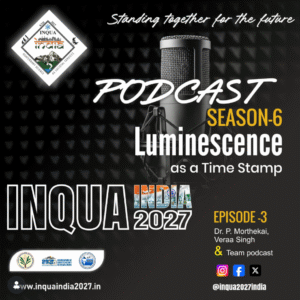 Podcast INQUA India 2027
Quaternary is the age when modern recognisable humans started inhabiting this planet. All over the world scientists are engaged in studying various aspects of human evolution. Once every 4 years scientists from all across the…
 INQUA Travel Grants for the XXII INQUA Congress 2027
Travel grants now open!
 8th Regional Meeting on Quaternary Geology, Slovenia – Call for abstracts
The event will take place from 4–6 November 2026 in Čatež ob Savi, East Slovenia.
 ONSEA Workshop 2026 – Online Event
The ONSEA workshops, originally planned in Morocco, will be switched ONLINE on 3-4 September 2026.
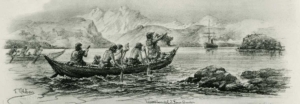 Workshop on the impact of climate and environmental change on the peopling of southern South America (CLIMPEOP-SSA)
Lumen, Paris-Saclay University, France – 16-18 September 2026
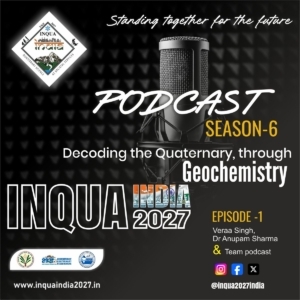 Podcast INQUA India 2027
Quaternary is the age when modern recognisable humans started inhabiting this planet. All over the world scientists are engaged in studying various aspects of human evolution. Once every 4 years scientists from all across the…