Project 2513 sy: Training Researchers in Core Analysis with Scanner XRF for South America (TRAC-XSA)
Abstract
The climate of South America is highly complex, influenced by phenomena like El Niño-Southern Oscillation (ENSO) and the Southern Annular Mode (SAM), which impact precipitation and temperature across the continent. Sediment cores from lakes, peatlands, marine, and fjord environments serve as valuable archives for understanding long-term climate variability. X-ray fluorescence core scanning (XRF-CS) is a non-destructive technique that provides high-resolution geochemical data, aiding in paleoclimate reconstructions. Despite its global relevance, South America has historically lacked access to XRF-CS technology, limiting research output compared to the Northern Hemisphere. The recent acquisition of XRF-CS equipment at the University of Concepción, Chile, offers an opportunity to bridge this gap, fostering collaboration, knowledge exchange, and capacity building among researchers, particularly Early Career Researchers (ECRs) and Developing Country Researchers (DCRs). This initiative aims to reduce disparities in Quaternary studies between the Global North and South while promoting inclusivity and diversity within the scientific community.

Objectives:
- To enhance technical skills in XRF-CS for high-resolution geochemical data analysis,
- To promote collaboration among researchers across South America,
- To generate geochemical data to improve understanding of climate variability and enhance climate models,
- To ensure equitable participation across diverse disciplines, genders, and countries
Project leaders:
- Roberto Urrutia – Universidad de Concepción, Chile
- Denisse Álvarez – Universidad Santo Tomás, Universidad de Concepción (UdeC), Chile



Latest developments
View moreLatest developments Podcast INQUA India 2027
Quaternary is the age when modern recognisable humans started inhabiting this planet. All over the world scientists are engaged in studying various aspects of human evolution. Once every 4 years scientists from all across the…
 INQUA Travel Grants for the XXII INQUA Congress 2027
Travel grants now open!
 8th Regional Meeting on Quaternary Geology, Slovenia – Call for abstracts
The event will take place from 4–6 November 2026 in Čatež ob Savi, East Slovenia.
 ONSEA Workshop 2026 – Online Event
The ONSEA workshops, originally planned in Morocco, will be switched ONLINE on 3-4 September 2026.
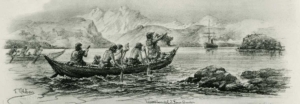 Workshop on the impact of climate and environmental change on the peopling of southern South America (CLIMPEOP-SSA)
Lumen, Paris-Saclay University, France – 16-18 September 2026
 Podcast INQUA India 2027
Quaternary is the age when modern recognisable humans started inhabiting this planet. All over the world scientists are engaged in studying various aspects of human evolution. Once every 4 years scientists from all across the…